
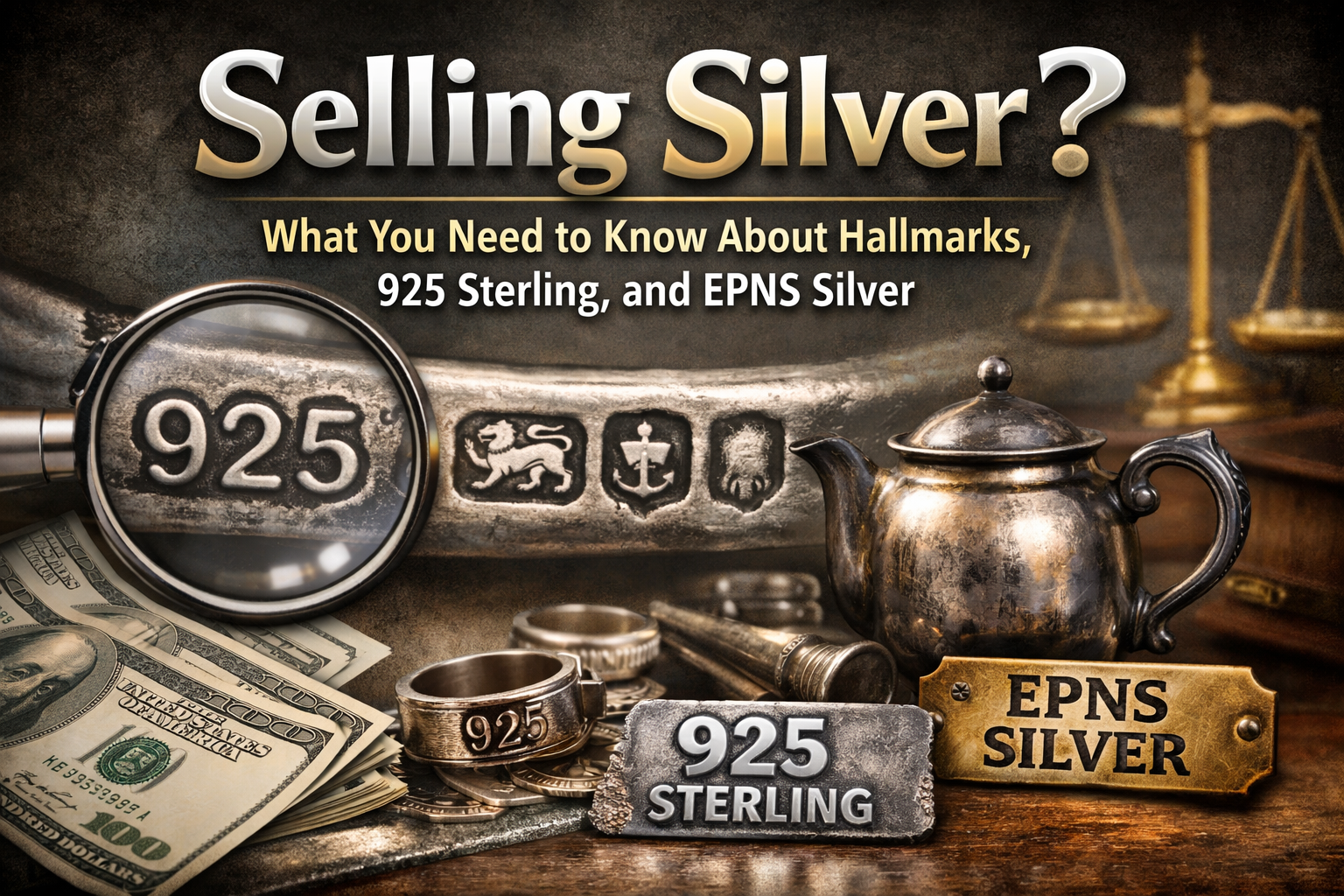
Silver hallmarks tell the story of what your silver is really worth. Whether it’s inherited cutlery, jewellery tucked away in a drawer, or decorative pieces on the mantelpiece, knowing how to read silver hallmarks can be the difference between owning a valuable asset and holding something with little intrinsic value.
Two of the most commonly confused markings are 925 sterling silver and EPNS. While they may look similar to the untrained eye, they represent very different materials — and very different values.
What Are Silver Hallmarks?
Hallmarks are small stamped symbols applied to silver items to indicate purity, origin, and authenticity. In the UK and many Commonwealth countries, hallmarks are legally regulated and have been used for centuries to protect consumers.
A traditional British hallmark may include:
- A purity mark (such as 925)
- An assay office symbol (London, Birmingham, Sheffield, etc.)
- A maker’s mark
- A date letter
These marks confirm that the item has been independently tested and meets legal silver standards.
What Is 925 Sterling Silver?
925 sterling silver means the item contains 92.5% pure silver, with the remaining 7.5% typically made up of copper for strength and durability. This is the international standard for sterling silver and is fully recognised as a precious metal.
Common markings include:
- 925
- STERLING
- STG
- British lion passant (on UK-hallmarked items)
Sterling silver has real intrinsic value and is traded based on its weight and the current silver price. Jewellery, antique silverware, coins, and some decorative objects are often made from sterling silver.
If an item is marked 925, it is almost always worth having professionally assessed, as it may contain a meaningful amount of silver value — sometimes far more than people expect.
What Is EPNS Silver?
EPNS stands for Electroplated Nickel Silver. Despite the word “silver” appearing in the name, EPNS contains no solid silver of meaningful value.
Instead, EPNS items are made from a base metal (usually nickel, copper, and zinc) that has been coated with a very thin layer of silver using an electroplating process. This silver layer is microscopic and does not contribute to melt value.
Common EPNS-related markings include:
- EPNS
- A1
- Silver Plate
- Electroplate
- Nickel Silver
EPNS was widely used in cutlery, serving trays, teapots, and household items from the late 19th century onwards as a cost-effective alternative to solid silver.
Key Differences Between 925 and EPNS
| Feature | 925 Sterling Silver | EPNS Silver |
|---|---|---|
| Silver content | 92.5% solid silver | Minimal silver plating only |
| Intrinsic value | High | Very low |
| Hallmarked | Yes (regulated) | No official hallmark |
| Melt value | Yes | No |
| Common uses | Jewellery, coins, antique silver | Cutlery, trays, tableware |
Why EPNS Has Little Scrap Value
Because the silver coating on EPNS is extremely thin, it cannot be economically separated or refined. As a result, EPNS items are not traded as precious metal scrap, regardless of how heavy or impressive they appear.
That said, some EPNS items may still have decorative, antique, or collector value, but this is based on craftsmanship and demand — not silver content.
Why Hallmarks Matter When Selling Silver
Many people assume that anything that looks like silver must be valuable — but hallmarks are the only reliable way to tell. A quick professional inspection can immediately identify whether an item is solid sterling silver or silver-plated.
With silver prices having risen significantly in recent years, many households are unknowingly sitting on valuable sterling silver items. Old jewellery, inherited cutlery, broken chains, mismatched spoons, or unused ornaments can often be converted into immediate cash.
Final Thought
If you see 925, sterling, or a British lion hallmark, your item contains real silver and may be worth far more than you expect. If you see EPNS or silver plate, it’s not scrap silver — but it may still have other value worth exploring.
The smartest step is to have your silver professionally assessed. Understanding hallmarks turns uncertainty into clarity — and in many cases, unlocks hidden value sitting quietly at home.
Comments are closed